Sunday, February 5, 2017

Prompt 2: Marketing Ethics

By Lindsey Murphy

The marketing and advertising industries don’t have the best reputation, but I believe they are improving their deceptive and stereotypical ways over time. According to the American Marketing Association’s website, marketers uphold ethical values such as honesty, responsibility, fairness, respect, transparency, and citizenship. The preamble states that,”As marketers, we recognize that we not only serve our organizations but also act as stewards of society in creating, facilitating and executing the transactions that are part of the greater economy.” The code of ethics stresses the importance of integrity when it comes to marketing to avoid “deception in product design, pricing, communication, and delivery of distribution. This code of ethics corresponds well to my code of ethics. I think respect and responsibility are some of the best qualities to have.

Honesty is the best policy, especially when you’re trying to sell a product to someone. Although, I wouldn’t say that the marketing industry always maintains this code of ethics. For example, Carl’s Jr. used a woman’s naked body in one of its commercials to advertise a so-called natural burger. This isn’t very respectful, and many other companies use sex appeal to advertise pretty much anything. Advertising is also seen as deceptive by many. Have you ever seen a commercial for a big mac? Chances are if you order one from McDonald’s, the burger is a lot smaller in person than how the advertisement shows. These examples are a few of many that can show that marketing and advertising strategies aren’t always truthful or respectful. The FTC and FDA control this so nothing gets out of hand with inappropriate, deceptive material or false advertising. Could you imagine what the world would be like if the way products were marketed wasn’t controlled? I think we would all be suffering from some trust issues.


"American Marketing Association." American Marketing Association. N.p., n.d. Web. 05 Feb. 2017.
Realino, Jeyl. "Blogpost 4: Truths and Lies About What We Buy." Blogpost 4: Truths and Lies About What We Buy. N.p., 01 Jan. 1970. Web. 05 Feb. 2017.

Strategy, Positioning and Branding in Marketing


By Allison Zwarka

There are four main stages a marketer goes through during a project:

1.       Analysis, strategy and positioning

2.       Media exposure and critical mass

3.       Commercialization

4.       Implementation

Analysis, Strategy, and Positioning

The first stage of starting a new project consists of research and creating a plan of attack. This step also includes creating brand design and choosing a position.

Media Exposure and Critical Mass

This stage consists of making sure to keep your good or service in the media and on social networks. The second step of this is making sure to keep attracting people because they are a vital part of generating revenue.

Commercialization

Once taking a position and transforming your brand based on that position you should start to market all other commercial products relative to yours. In the sports marketing field this could mean stadium products, sponsorship deals, image and television rights of different players, and licensed products. This step requires the use of sales strategies and selling products in order to make money.

Implementation

The final phase is just as important as the rest of the steps. Implementation, or putting your plans into effect, is what you are working for in all the previous steps. Once you've implemented your plans you want to talk to customers and see their reactions to create good relationships with them. These relationships can help to create customer loyalty and lead to better deals in the future. This step is also where the marketer reflects and makes sure they have fulfilled all agreements and requirements of all contracts.


The first steps of this process require thought and planning while the final steps consist of carrying out these plans and making money from them. There is a lot of pressure to make money from all promotions and marketing done throughout the process and it is the marketers job to make sure that happens.


Calzada, Esteve. Show Me the Money!: How to Make Money from Sports Marketing. London: Bloomsbury, 2013. Print.

Saturday, February 4, 2017

Sports Marketing

By Jen Mylett

What is it?
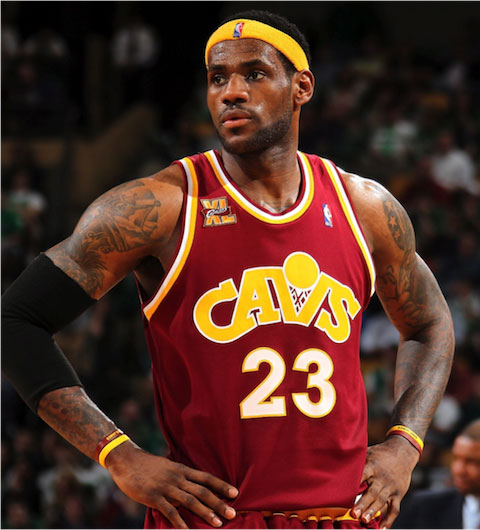
Sports marketing is all about creating a popular, expressive fan base so that supporters, sponsors, media and the government pay to promote organizations in a competitive sport-related environment. This specific marketing tactic generates revenue by developing and exploiting the principal assets of a sports property: brand, stadium, facilities, championships and athletes through the image rights, advertisements, matches, merchandising licenses, products, etc.

Other topics in the sports marketing field consist of companies that promote products and services through sports radio broadcasting and advertisements, athlete endorsements, newspapers, social media and licensing.

Who is involved?
-fans/customers
-teams, clubs, leagues, and competitions
-sponsors
-retailers, merchandisers, & sportswear manufacturers
-broadcasters & media
-representative associations
-gambling services
-economic initiatives

Education level?
The ideal degree-holding sports marketer will need a good understanding in today’s business economy and with issues in the market as well as some personal sales ability. They would need to have ethical and legal knowledge applying to sports marketing and also be able to manage marketing and human resources. About 71% of marketing specialists have a bachelor’s degree, while 25% have a master’s degree.

Individuals that are interested in sports marketing would have the ability to work in a wide variety of fields. Some include, but are not limited to: college sports, major, minor or amateur leagues, franchise management, corporate fitness/ wellness jobs, event management, public relations, media relations, sports law, licensing or even fundraising.

Cons:
Over time, there have been countless mishaps in sports history. There was the forced cancellation of the World Series and most of the 1994 season because of MLB players, then the NHL shut-down in 2005 that started because of players’ disagreement to owner’s demands in its new labor contract, and also the NBA lockout of 2011 that reduced the season from 82 to just 66 games.
The power that athletes in college and professional sports do have negative sides. Everything is extremely unpredictable in the sport’s world. Coaches willingly trade teams and players for more money. Teams can just move to another city overnight if they want to. Loyalty is hard to maintain in these fluctuating situations even if the fans don’t blame the teams for trying to get all the money they can. Teams lose fans as they trade players and team names in search of making more money just as brands would lose customers when they change advertisement campaigns every year.

Calzada, Esteve. "Show Me the Money!" Google Books. A&C Black, 2013, n.d. Web. 03 Feb. 2017. <https://books.google.com/books?id=TZs2AAAAQBAJ&printsec=frontcover&source=gbs_ViewAPI#v=onepage&q&f=false>.
"LeBron James." Healthy Celeb. HealthyCeleb.com, 17 Aug. 2016. Web. 04 Feb. 2017. <http://healthyceleb.com/lebron-james-height-weight-body-statistics/31090>.
"What Is Sports Marketing?" Marketing Career Information. Http://www.marketingcareeredu.org, n.d. Web. 03 Feb. 2017. <http://www.marketingcareeredu.org/sports-marketing/>.
"What Is Sports Marketing?" An Online Sports Marketing Textbook. Team Sports Marketing, 12 Jan. 2017. Web. 03 Feb. 2017. <http://teamsportsmarketing.com/the-text/the-fan/why/>.


Thursday, February 2, 2017

Retail Marketing

   By: Shannon Crilley

      The world of retail is changing as our society becomes more and more dependent on technology and trying to receive goods in the easiest and fastest way possible. For those in the marketing field trying to promote retail products, they have to be three steps ahead of the customer and of any changes that may happen due to technology and consumer expectations because of that. Retail marketing has always been an interest of mine so I was curious about all the changes being made and the new methods of marketing some companies have been trying out.


      After reading an online article from The Business Reporter, a European business newspaper, I learned that recently there have been some big changes in the field of retail marketing and what steps those working in the field have had to take in order to stay ahead of the game. According to this article, there are five big changes in retail lately that have shifted how marketers try to connect to customers while promoting their products all at the same time.

1) Consumers expect and demand hyperlocal experiences - This means that consumers want local goods. They ask their iPhone "whats the closest store to me" for convince. This has shifted marketing to focus on smaller, local markets rather than worldwide markets.

2) Technology giants are delivering against this expectation, ahead of everyone else - Over the past few months the big websites such as Google, Facebook, and Amazon have focused on local markets as well. 

3) Reputation management is going local - Recently smaller, more local companies have been strongly encouraging costumers to write reviews about their products in order to gain trust from the customers that might be use to only buying from major brand companies. The marketing teams of smaller companies are in charge of finding these ways to encourage customers to share their experience with the product they purchased, in order to gain more business.

4) The local search ecosystem is gaining in prominence - Google now lists local search results above organic responses. This is a game changer for businesses. Most consumers today don't like to take the time to scroll and research a certain product for too long, so if they can find what they want quickly and locally, they're sold. 

5) Increase in local media spending - Business marketers are realizing that their local stores are the ones that own the relationship with the customers and that those are who need to be nurtured in their media spending. 

      Markets are changing quickly! Consumers want fast and east transactions with companies and as a marketing major it's very interesting to see different trends arise and how companies manage to stay on top of them and change to meet the customers needs. 

"Local and Personal: The Future of Retail Marketing." Business Reporter. N.p. Web. 02 Feb. 2017.